A Year After Trump’s Second Term: Lessons from "Zootropolis"
Ms. Min Sheewon | Doctoral Candidate, University of Oxford
In this paper, I argue that the Disney film Zootropolis operates as a striking allegory for the contemporary United States, brought into sharper focus by the political climate of Trump's second term. The film's bright celebration of diversity, meritocracy, and peaceful coexistence mirrors America's enduring self-image as an open, pluralistic society. Yet it also exposes the anxieties that lie beneath this optimistic façade- fear of difference, deeply rooted structural inequalities, and the calculated politicization of identity- tensions that were markedly intensified during Trump's renewed presidency. When read against escalating domestic polarization and the global reverberations of U.S. foreign policy, Zootropolis reveals not only what the United States has aspired to represent, but also the widening contradictions that increasingly shape its political and cultural reality.
“Zootropolis is a unique place. It’s a crazy, beautiful, diverse city… where we celebrate our differences.” Disney’s Zootropolis (released as Zootopia in some markets) (2016) opens with an idealistic vision of a society in which difference is not merely tolerated but embraced, and where a plurality of species— predators and prey alike—are expected to coexist in harmony. The recent release of Zootropolis 2 prompted me to revisit the original film, and this time I viewed it with new eyes. After spending two and a half years in what I consider the real-world counterpart to the film’s metropolis, the United States, I came to recognize a deeper allegorical structure at work.
Zootropolis can be read as a metaphor for the American experiment itself: a nation built on the belief that anyone can become anything, regardless of origin, race, and gender, and one that has long celebrated diversity as a source of strength rather than weakness. The city’s distinct districts, designed for vastly different species yet united within a single political system, evoke the United States’ multicultural landscape, where racial, ethnic, and ideological enclaves coexist under the promise of shared citizenship. The film’s protagonist, Judy Hopps, faces the challenges of being born a “weak prey,” yet her story is framed as a triumph of hard work and individual determination. Her journey closely parallels the American myth of upward mobility, even as the narrative gradually reveals the structural barriers that complicate that promise, showing that the path to success is rarely as simple as merit alone.
Watching Zootropolis today, however, casts doubt on how realistic these aspirational ideals remain. The film’s surface-level harmony gives way to suspicion, scapegoating, and fear-driven politics, dynamics that resonate strongly with the United States’ recent struggles with polarization, nationalism, and exclusionary rhetoric. In this sense, Zootropolis is less a mirror of lived reality than a reminder of values the United States professes yet repeatedly fails to realize. As a cultural text, the film illuminates the tensions between pluralism and power, inclusion and control—tensions that not only shape America’s domestic conflicts but also reverberate through its global economic and political actions.
What Trump's "Make America Great Again" Tells Us
Whatever direction America is heading, it cannot be attributed to a single individual alone. After all, President Trump was elected by the citizens of the United States – America wanted Trump. Thus, Trump’s election illuminates what a significant segment of the American electorate desires. Twice— first in 2016 and again in 2024—tens of millions of Americans chose him as their leader. This compels a difficult but necessary question: What does Trump represent that so many voters find compelling, and what vision of America do these citizens desire? Ignoring this reality risks the rise of another Trump- like figure— or even a third Trump term.
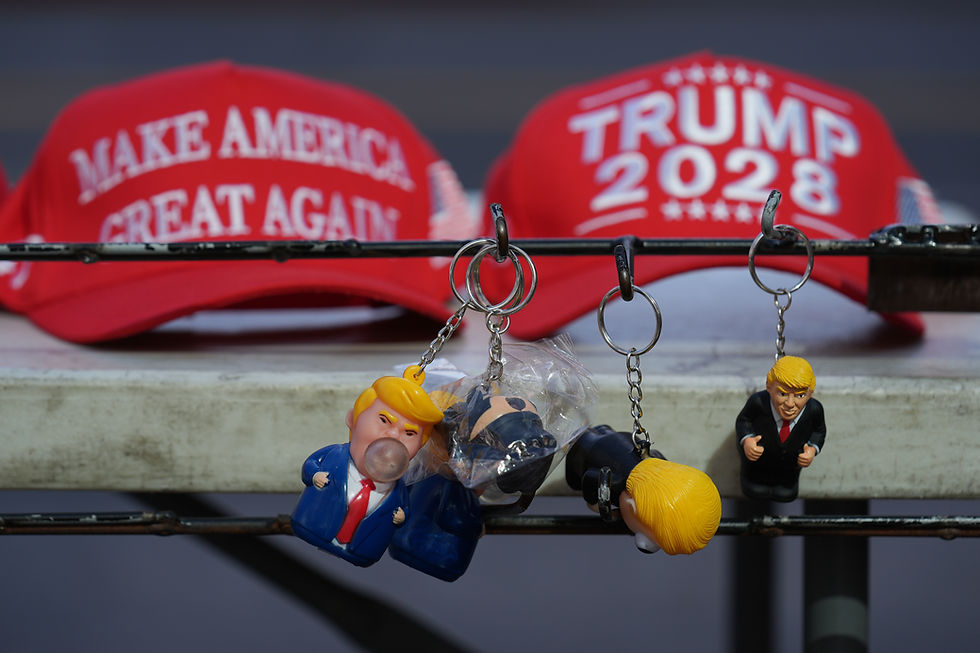
Trump’s campaign slogans, “Make America Great Again” and “Keep America Great,” were broad symbolic appeals rather than detailed policy proposals. Many voters did not meticulously review the specifics of his platform but resonated with promises of economic protectionism, tighter borders, mass deportations, restoration of traditional values, and an America less constrained by global commitments. This offers a crucial lesson: to understand contemporary America, we must recognize that these ideas drew millions of supporters, revealing persistent questions about national identity and the country’s future direction.
Even among Americans who celebrate the nation’s diversity, the “harmonious” dimension of the national story has become increasingly difficult to sustain. President Trump’s rhetoric and policies, particularly during the first year of his second term, intensified not only partisan divisions but fractures along racial, national, religious, and gender lines. His portrayal of cities such as Washington, D.C., home to historically Black neighborhoods, as dangerous and disorderly, invoked long-standing discriminatory tropes. His call for a “permanent pause” on migration from what he termed “third world countries” and his instruction to immigration authorities to re-evaluate green cards from “countries of concern” reflected a worldview structured around exclusion and hierarchy. Similarly, his executive order recognizing only two immutable sexes—male and female— codified a narrow understanding of identity at the expense of transgender and non-binary Americans. In addition, his widely publicized sexist remarks sparked outrage among advocates for women’s rights, further deepening divisions along gender lines.
Perhaps the most consequential legacy of Trump’s second term has been the transformation of the United States’ self-conception as a guardian of liberal democracy. Institutions, including the Carnegie Endowment for International Peace and Harvard’s Kennedy School, as well as media platforms, such as the National Public Radio, documented patterns associated with democratic backsliding: politicization of the civil service, hostility toward a free press, intensified executive unilateralism, and delegitimization of electoral processes. Trump’s antagonism toward critical media outlets fostered a climate in which misinformation flourished and journalistic credibility was undermined. Freedom of speech, long a core American value, has come under threat.
A similarly transformative shift occurred in Trump 2.0’s economic and trade agenda, which embraced an explicitly protectionist orientation. The expansion of tariffs on goods from China, the European Union, and even close allies and neighbors, signaled a departure from decades of relative bipartisan support for open markets. Trump framed these measures as necessary to “rebalance” economic relations and revive domestic manufacturing, but their broader implications were far-reaching: rising consumer costs, retaliatory tariffs from trading partners, and heightened uncertainty within global supply chains. The United States, once a principal architect of the liberal economic order, began to resemble a defensive, inward-looking actor skeptical of interdependence. This protectionist turns not only strained relations with allies but also challenged the credibility of American leadership in institutions designed to uphold free trade and economic cooperation.
In the realm of international cooperation, Trump’s retreat from multilateral agreements, from the Paris Climate Accord to UNESCO, further signaled a reorientation from global leadership toward narrow nationalism. The administration has also cut its funding for the World Trade Organization (WTO), fueling speculation that the United States might consider withdrawing from the institution it led to create. With China having filed complaints over U.S. tariff policies, some have even suggested that the WTO could move to expel the United States. The Trump administration’s renewed announcements of withdrawal from key international organizations further shocked the international community.
For decades, the United States had been the architect of the liberal international order; under Trump, it increasingly became a critic, and at times, a saboteur. This shift leaves the global system more fragile amid rising democratic backsliding, great-power rivalry, and mounting climate crises.
In the Middle of Difficulty Lies Opportunity
Among Trump’s actions, the one that unsettled me most personally was his attacks on academic institutions. Harvard, Columbia, Brown, the University of Pennsylvania, and other universities became targets of political denunciation and federal scrutiny. American higher education has long depended on openness and the diversity of perspectives that allow for rigorous scholarship, vibrant debate, and the cultivation of informed citizens. Attacks on universities therefore strike not only at individual institutions, but at the intellectual infrastructure of democracy itself.
Universities are spaces where students and faculty from diverse backgrounds engage in free inquiry, challenge assumptions, and encounter ideas far removed from their own experiences. Academic freedom is not a luxury; it is the foundation of intellectual progress and responsibility. Faculty and students, domestic and international, privileged and marginalized, come together in classrooms and seminars to interrogate the world. When institutions are cast as scapegoats, the nation risks losing one of its most vital engines of innovation and civic education. The global renown and prestige of many American universities stem from this vibrant culture of academic exchange, made possible by an environment in which intellectual freedom is protected and celebrated.
Yet just as South Korea defended its democracy against former President Yoon Seok Yeol’s attempt to invoke martial law in December 2024, which ultimately led to his impeachment and restoration of the democratic process, American universities have not remained passive in the face of political attacks. They publicly reaffirmed their commitment to academic freedom, defending faculty, staff, and students against politically motivated pressures. University leadership, legal teams, and professional associations worked to safeguard institutional autonomy, emphasizing that scholarship cannot be subordinated to transient political interests. Faculty and student organizations hosted panels, issued statements, and engaged with the media to underscore the value of evidence-based research and the free exchange of ideas.
Much like South Korea’s impeachment crisis that strengthened its democracy and tested its recovery potential, these actions by American institutions demonstrate not only the resilience of higher education but also the broader sanctity of democracy itself. By asserting their independence and resisting undue interference, universities demonstrated that intellectual freedom is non- negotiable, even under unprecedented political scrutiny. More broadly, their response offers a model for confronting threats to the core values that have defined the United States since its founding. The principles, rights, and beliefs that generations of Americans have built and defended do not vanish overnight; moments of strain can, paradoxically, reveal their strength. This may well be a turning point that highlights the enduring strength of American values under attack.
Will the United States of America Remain United?
At the end of Zootropolis, the antagonist, a leader who sows division for political gain, is exposed and ultimately arrested. Judy reflects:
I thought Zootropolis was this perfect place. Where everyone got along and anyone could be anything. Turns out real life’s a bit more complicated than a slogan on a bumper sticker. Real life is messy. We all have limitations. We all make mistakes.
This resonates today. America is complex, shaped by competing identities, fears, hopes, and histories. No slogan—whether “Make America Great Again,” “Keep America Great,” or even “anyone can be anything”—can capture that complexity.
This is why the Founding Fathers allowed for the Constitution to be amended. The Constitution has, in fact, been amended 27 times, an acknowledgment that a durable democracy requires adaptability rather than perfection. What matters is not an unchanging system, but a continued commitment to the norms that enable diverse societies to endure: mutual respect, pluralism, accountability, and the recognition of shared humanity.
One year after Trump’s second term, the United States stands at a crossroads. The divisions he amplified—reflecting, in many cases, sentiments already present among the public—will not fade quickly, nor will the geopolitical shifts he set in motion be easily reversed. Yet this moment is also instructive. It forces us to think critically about democracy, citizenship, leadership, and the values necessary to sustain a pluralistic society.
So, can the United States recover and remain united? The answer is far from certain, and the challenge is more complex than simply electing a new leader. As noted earlier, Donald Trump did not emerge out of nowhere; his rise reflected deep-seated currents within American society. Naively hoping that a more internationally minded or outward-looking “democratic” president can resolve the nation’s divisions risks missing a fundamental reality: lasting change must originate with the American people themselves. To restore unity and strengthen its global role, citizens must confront entrenched biases, engage across ideological divides, and actively uphold the democratic norms and values that sustain a pluralistic society. While both parties must cultivate leaders capable of reflecting and advancing American values, leadership alone cannot replace the sustained work of a civic-minded populace.
Optimistically, despite the reshaping of the political landscape, the United States retains the tools for recovery: adaptable institutions, a diverse and engaged population, and a culture that has historically valued reform over rigidity. Yet the persistence of populist appeals and deep-seated polarization suggests that the pressures Trump exemplified may recur, requiring ongoing vigilance and active engagement. Like Judy navigating systemic barriers in Zootropolis, America must confront its challenges honestly, balancing fairness with perseverance, and committing to the long-term work necessary to uphold its democratic ideals.
Like Zootropolis, the United States is neither perfect nor doomed. It is a nation of extraordinary diversity, resilience, and enduring contradictions. The question is not whether America can return to an idealized harmony in which everyone is uniform and unquestioning, but whether it can learn to live with its differences, embracing their complexity and richness without allowing fear, resentment, or exclusion to dictate its future. More than merely surviving division, the nation’s true test lies in its capacity to remain united through a shared commitment to liberalism, democracy, and freedom.
America’s enduring strength lies not in perfection, but in its resilience, the ability to confront division, embrace difference, and uphold the values that define its democracy.
About the Author

Ms. Min Sheewon
Doctoral Candidate, University of Oxford
Ms. MIN Sheewon is a doctoral candidate in International Relations at the University of Oxford. She has contributed to research at think tanks in Washington, D.C., and Seoul, including the East Asia Institute (EAI), the Center for Strategic and International Studies (CSIS), and the Korea Economic Institute (KEI). She holds a master’s degree from Georgetown University and a bachelor’s degree from Yonsei University.


