K-Defense Strategy: Beyond Defense Exports Toward Sustainable Global Partnerships
Dr. Kang Eunho | Former Minister of the Defense Acquisition Program Administration (DAPA)

PROSPECT AND CONDITIONS FOR KOREA’S DEFENSE INDUSTRY
Korea’s defense industry is increasingly being recognized not merely as an emerging supplier, but as a key player in the global defense market. In late 2021, South Korea secured a contract worth approximately KRW 1 trillion to supply K9 self-propelled howitzers to Australia, followed by a contract worth approximately KRW 4 trillion to supply the Cheongung-II (KM-SAM II) air and missile defense system to the United Arab Emirates. In the second half of 2022, large-scale exports of major weapons systems—including the K2 main battle tank, K9 self-propelled howitzer, and FA-50 light combat aircraft—to Poland drew significant international attention.
More recently, Korea’s stature has grown as Hanwha Ocean competed directly with TKMS, one of the world’s leading submarine suppliers, for Canada’s submarine suppliers, for Canada’s submarine procurement program. At the same time, South Korea and the United States have discussed cooperation under MASGA initiative.[1] These developments have reinforced the view that K-defense has moved beyond the status of a temporarily successful emerging player.
Over the past five years, South Korea’s defense export orders amounted to USD 3.0 billion in 2020, USD 7.3 billion in 2021, USD 17.3 billion in 2022, USD 13.5 billion in 2023, and USD 9.6 billion in 2024. In 2025, the figure rebounded to approximately USD 15.3 billion.[2] Although annual order volumes have fluctuated, it is clear that South Korea has developed the capacity to compete with the world’s major defense-industrial powers.
The greatest competitive advantage of K-defense lies in the combination of technological capabilities and manufacturing capacity. South Korean companies can supply world-class weapons systems at relatively competitive prices while producing and delivering contracted quantities within agreed timelines. While Europe’s traditional defense-industrial powers reduced production facilities and workforces following the end of the Cold War, South Korea continued to maintain its research and development capabilities and production base in response to the persistent threat from North Korea. This foundation has been reinforced by corporate management innovation and the highly skilled manufacturing capabilities of domestic suppliers, enabling South Korea’s defense industry to simultaneously meet demanding requirements for price, performance, and delivery schedules.
Will K-defense’s existing strengths continue to make them competitive in the global defense market? Given the various forms of competitive pressure now emerging across the international defense industry, the increasingly intense competition among suppliers, and the changing character of future warfare, South Korea is unlikely to be able to overcome the challenges ahead by relying on its existing strengths alone. This article therefore seeks to identify the key obstacles that K-defense must overcome and propose measures to address them.
For the purposes of this article, “G4” refers to the group of the world’s four leading defense-industrial countries[3] that shape global supply chains and lead international defense cooperation. The goal for South Korea is not simply to become a country that sells large volumes of weapons, but to evolve into a defense-industrial power that works with allies and partners to develop emerging defense technologies, shares production capabilities, jointly expands into global markets, and exercises meaningful influence over the international defense-industrial order. Defense export values and global market share are therefore meaningful only as outward indicators of the results generated by these broader efforts and activities.
INTENSIFYING COMPETITION AND THE CHANGING CHARACTER OF FUTURE WARFARE
The global defense market is undergoing rapid restructuring. Since the outbreak of the Ukraine war, European countries have been rebuilding their domestic defense industries while expanding joint development, co-production, and joint procurement. As the “Buy European” approach gains momentum and NATO-centered supply chains become more firmly established, the European defense market is increasingly becoming organized around regional blocs, creating significant barriers to entry for K-defense. This trend is effectively limiting the very opportunities in which K-defense has traditionally been able to leverage its strengths, including price competitiveness and rapid delivery.
Recent international competitions illustrate this challenge more concretely. South Korea’s unsuccessful bids for submarine procurement programs in Canada and Poland demonstrate that K-defense’s existing strengths alone may not be sufficient to overcome the barriers to entry posed by a defense market increasingly organized around NATO and European suppliers. Major U.S. defense contractors are also unlikely to stand by as K-defense continues to expand its presence in the global market.
The demands of partner countries are also changing. Few countries today are interested in simply purchasing weapons systems. They increasingly demand local production, technology transfer, participation by domestic firms in supply chains, job creation, and long-term logistics and sustainment support. The success or failure of major defense deals therefore depends not only on the performance of the weapons systems themselves, but increasingly on a country’s comprehensive ability to combine financing, diplomacy, industrial cooperation, and supply-chain integration at the national level.
The character of warfare is also changing rapidly. The Ukraine war and conflicts in the Middle East have demonstrated that drones, artificial intelligence, satellite-based intelligence, electronic warfare, and cyber capabilities are increasingly shaping outcomes on the battlefield. The performance of individual platforms such as tanks, self-propelled howitzers, naval vessels, and combat aircraft is no longer sufficient on its own. Existing platforms must evolve into integrated manned-unmanned systems that connect them with drones and other unmanned systems, as well as space and cyber capabilities. Is K-defense prepared for these changes?
AN URGENT NEED TO ACCELERATE THE DEVELOPMENT OF CUTTING-EDGE CORE TECHNOLOGIES AND REDESIGN MARKET STRATEGY
For the momentum of K-defense to remain sustainable, two major shifts are required. First, South Korea must build a healthy defense-industrial ecosystem through bold, high-risk technological development and mutually beneficial cooperation between large corporations and small and medium-sized enterprises. The core technologies of future warfare cannot be secured simply through research and development that begins only after performance requirements have been formally established. In areas such as physical AI, defense semiconductors, drones and counter-drone systems, manned-unmanned teaming, electronic warfare, space, and cyber, South Korea needs a more ambitious approach to R&D that anticipates future threats and secures critical technologies before those requirements fully emerge.
Failure and trial and error are inevitable in the development of highly advanced technologies. If unavoidable setbacks in the R&D process are immediately treated as evidence of incompetence or misconduct, researchers and companies will have little incentive to take risks. What is needed is a portfolio-based R&D model in which meaningful success is recognized even if only one or two out of ten projects succeed, together with an innovation system in which bold experimentation is regarded as a normal and necessary part of technological progress. Legal and institutional safeguards should be established so that researchers and companies can pursue high-risk innovation without excessive fear of failure.
The direction of defense-industrial development should also shift away from vertical and horizontal integration centered on a small number of firms and toward the creation of a healthy ecosystem in which a diverse range of actors can fully exercise their technological capabilities and expertise. Rather than relying on closed, conglomerate-centered industrial structures, South Korea should foster an environment in which innovative small and medium-sized companies can develop new technologies and critical components while collaborating flexibly with major corporations and research institutions. As the pace of technological change accelerates, closed structures dominated by particular firms are more likely to constrain innovation.
An open ecosystem that organically connects large corporations, mid-sized companies, startups, and research institutions is better suited to sustaining continuous innovation. The government and major defense firms should provide smaller and mid-sized companies with stable demand and sufficient opportunities for testing and evaluation so that they can accumulate technological expertise over the long term. What the government should cultivate is not individual firms, but the defense-industrial ecosystem itself. When the ecosystem becomes stronger, companies within it will also be better positioned to achieve sustainable growth.
The focus of research and development should likewise expand beyond complete platforms to include critical components and enabling technologies such as sensors and radars, engines and propulsion systems, semiconductors, and advanced materials. South Korea does not need to develop every technology independently, but it does need a national-level strategy that distinguishes between technologies that must be secured domestically and those that can be jointly developed with allies and partners. Even where companies compete at the platform level, South Korea should be able to expand joint development and supply-chain cooperation with major global defense firms in critical components and subsystems.
Second, South Korea must shift its market strategy from one centered on simple arms sales to long-term industrial cooperation that enables both Korea and its partner countries to grow together. While expanding beyond its current concentration in Eastern Europe and the Middle East into Western Europe and Latin America, South Korea must also manage its relationships with existing partners with greater care and consistency. Support should continue well beyond the delivery of weapons systems, to include operations and maintenance, education and training, spare-parts supply, and capability upgrades. The assessments of early customer countries will provide the strongest foundation for establishing K-defense as a globally trusted premium brand.
South Korea should also consider deploying a Korean-style Defense Cooperation Group (K-DCG) to key partner countries, composed of experts from the government, military, and defense industry. The K-DCG could help resolve operational and maintenance issues on the ground, ensure follow-on logistics support and capability upgrades, and deepen cooperation through the joint development of emerging technologies and local production. South Korea should aim to become a long-term partner that helps strengthen both the defense capabilities and defense-industrial base of its partner countries.
South Korean defense companies should likewise approach cooperation with allies and partners on the understanding that what comes after winning an individual contract is even more important than securing the contract itself. Cooperation should move beyond industrial arrangements designed merely to support a particular bid. Korean firms should seek sustained participation in the defense-industrial ecosystems and supply chains of key partner countries, while broadening cooperation to include the supply of critical components, joint research and development, maintenance, repair and overhaul (MRO), capability upgrades, and joint entry into third-country markets.
The time has come for Korean defense companies to transform themselves from firms that “manufacture in Korea and sell abroad” into truly global defense companies that “develop, produce, and expand into new markets together with partners around the world.”
BEYOND “DEFENSE EXPORTS” TOWARD MUTUALLY BENEFICIAL GLOBAL COOPERATION
It is time to move beyond the term “defense exports” itself. The word “exports” evokes a one-way transaction in which South Korea produces weapons and another country simply purchases them. Future international defense cooperation, however, should evolve into a mutually beneficial model that combines joint research and development, co-production, joint entry into global markets, supply-chain participation, and follow-on logistics support. South Korea needs strategies tailored to the security environment and industrial base of each partner country, including appropriate models for local production and technological cooperation, while jointly bringing co-developed and co-produced weapons systems and critical components into third-country markets. Established defense-industrial powers should not be viewed solely as competitors. South Korea should compete vigorously where competition is necessary, while pursuing bold cooperation in areas where mutual interests align. The international defense market will increasingly become a complex arena in which competition and cooperation coexist.
ROK-U.S. defense-industrial cooperation will be one of the major pillars of this broader global cooperation. Entering the world’s largest defense market—the United States—is essential if K-defense is to join the G4. South Korea, however, should not insist solely on selling complete Korean weapons systems as finished products. Beginning with naval maintenance, repair, and overhaul and shipbuilding cooperation, the scope of cooperation should be expanded to include joint research and development, co-production, the supply of critical components, and joint entry into global markets. Beyond the United States, South Korea should also build sustainable frameworks for defense-industrial cooperation with NATO members and other key allies and partners by combining the respective strengths of each country.
THE NEXT THREE YEARS ARE NOT A GOLDEN TIME, BUT A CRITICAL TIME
K-defense’s entry into the G4 is entirely possible. However, increasing the value of defense contracts should not become a policy objective in itself. The focus should instead be on challenging research and development that is willing to risk failure, a healthy ecosystem in which large companies and small and medium-sized enterprises can prosper together, securing core technologies and supply chains, maintaining the trust of existing partner countries, developing new markets, and advancing global cooperation.
South Korea has, in my assessment, roughly three years to act. The period before European defense companies fully restore their production capacity represents effectively the last strategic window for South Korea to establish itself within emerging global defense supply chains. It is a decisive period in which K-defense must move beyond the approaches that brought success in the past and redesign itself for a changing global defense-industrial order. How South Korea uses this period will determine whether it remains a country of temporary arms-sales success or evolves into a sustainable G4 defense-industrial power that shares technology, production, and markets with allies and partners, helps shape the global defense-industrial order, and drives innovation in advanced technologies and manufacturing.
The next three years will also be a decisive period for South Korean defense companies to transform themselves into global defense firms. They must establish themselves as indispensable to current partners, while closely cooperating with major European and U.S. defense companies to jointly develop, produce, and supply core systems. This must become the way in which K-defense companies survive in the future.
The future of K-defense depends not on how many weapons it sells, but on how many allied countries it can work with to jointly develop technologies, produce together, and jointly develop global markets. That is the path toward becoming a sustainable G4 member.
Notes
[1] MASGA (Make America Shipbuilding Great Again) is a term proposed by South Korean Government during its tariff negotiations with the United States to describe bilateral cooperation between the two countries in the shipbuilding sector.
[2] The annual defense export order values are based on official figures released by South Korea’s Defense Acquisition Program Administration (DAPA).
[3] The “G4” of leading defense-exporting countries is not a fixed group and may change depending on factors such as export volume and technological capabilities. Based solely on the value of annual defense export orders in 2025, the G4 can be considered to comprise the United States, France, China, and South Korea.
About the Author
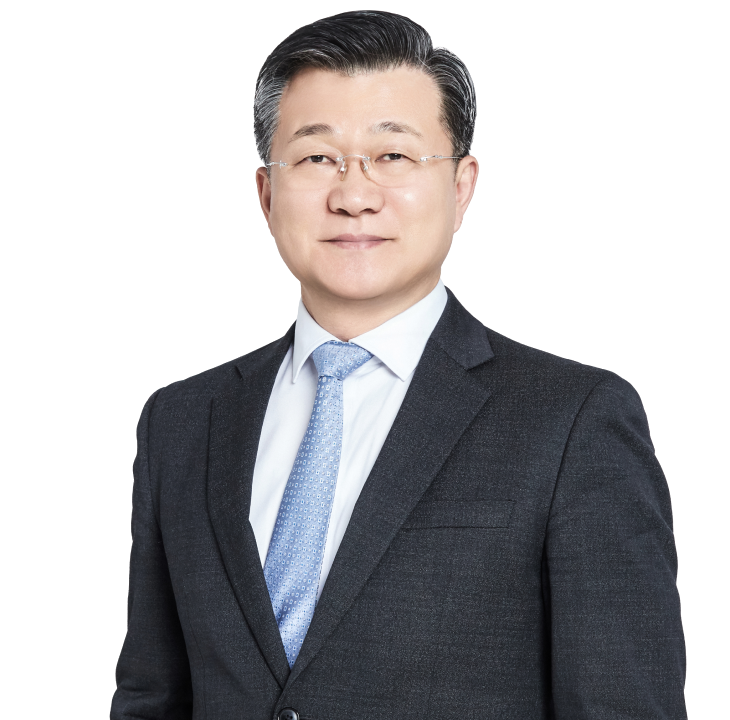
Dr. Kang Eunho
Former Minister of the Defense Acquisition Program Administration (DAPA)
Dr. Kang Eunho is one of Korea’s foremost authorities on defense acquisition and defense industry policy, with more than 30 years of distinguished public service. He served as the 11th Minister of the Defense Acquisition Program Administration (DAPA) and was the first official to be internally promoted to lead the organization. Since the establishment of DAPA in 2006, Dr. Kang has played a pivotal role in shaping and advancing Korea’s defense acquisition system. Dr. Kang currently serves as Professor and Head of the Department of Advanced Defense Industry at Jeonbuk National University, where he also directs the Defense Industry Research Institute.


